Friday, 1 February 2019

February Phytochemicals - malic acid and more!

Malic acid: gets its name from common apple (Malus domestica), the plant from which the acid was first isolated in the 1700s. Though an important acid in many fruits, it is also central to #CAM (an arid climate photosynthesis variant) as a CO2 storage unit. .

Inspired by @GoogleDoodlesaromatic heterocycles discovered by Friedlieb F. Runge, including quinoline (the core of the plant molecule quinine), pyrrole (a structure found in chlorophyll), and caffeine (evolved independently in tea, coffee, and cacao).

This week’s idea from @mishaploid: a prenylated furanocoumarin bergamottin found in some citrus spp. (grapefruit, pomelo, bergamot organge) that irreversibly inhibits drug-metabolizing P450 enzymes and can lead to accidental drug overdoses. Watch out!

Phorbol esters: acylated diterpenoids found in Euphorbiaceae (for example, Croton and Jatropha spp.). These poisonous compounds promote the growth of cancerous tumors and are used in biomedical studies of tumor formation and proliferation.

Thursday, 3 January 2019

December phytochemicals - poison tipped arrows and holiday highlights

Glaziovianin: a flavonoid compound from Ateleia glazioviana that belongs to a family of tubulin polymerization inhibitors. By inhibiting microtubule assembly, these compounds interfere with cell division = potential chemotheraputics.

Ouabain:The poison-tipped arrow: brought to you by biochemical pathways in the Apocyanace! Species in this lineage such as Acokanthera schimperi twist and modify squalene into this potent cardiac glycoside. In small doses it can treat low blood pressure, but when delivered by arrow, inhibits the sodium-potassium ion pump and can cause cardiac arrest.

Pinenes: Happy holidays! If you enjoy the smell of a Christmas tree this season (mainly Pinaceae and Cupressaceae spp.), you are likely smelling a mixture of compounds that contains pinenes. Isolated, these monoterpenes smell a bit like turpentine and repel insects.

Ethyl lactate: Impress friends on #NYE2018: tout ethyl lactate, a volatile ester (union of an alcohol - ethanol, and acid - lactic acid) that contributes a buttery, creamy aroma to champagne. Also a green solvent that can be used to clean and degrease your post-party pans.

Sunday, 9 December 2018

November phytochemicals - frankincense, ephedrine, and more!

Gallagic acid: a beautifully symmetrical precursor to complex ellagitannin phenolics in the rind, heartwood, and bark of pomegranate (Punica granatum). These compounds seem to inhibit carbonic anhydrases, metalloenzymes that interconvert water/CO2 and carbonic acid.

Olibanic acids: Relatively recently discovered, these compounds are from Boswellia sacra (Sapindales), the frankincense tree (https://bit.ly/2hncgHQ). These molecules give the odor of the tree’s dried resin a characteristic 'old church' note. Now that these compounds are known, genes underlying their biosynthesis can be discovered, and the frankincense odor could be replicated in engineered yeast - putting a stop to the unsustainable harvest of Boswellia trees.

Cucurbitacins: These bitter-tasting compounds are found in some types of pumpkin and squash (cucurbitaceae), mainly wild varieties. In high doses (e.g. from bitter zucchini) they can cause illness, even death(!), and are under basic research. Stay away from bitter squash!

Ephedrine alkaloids: Components of traditional Chinese medicine from Ephedra spp. (gymnosperm shrubs), these isomeric phenolics are stimulants and can increase blood pressure. Their diastereomers (pseudoephedrine) are less potent.

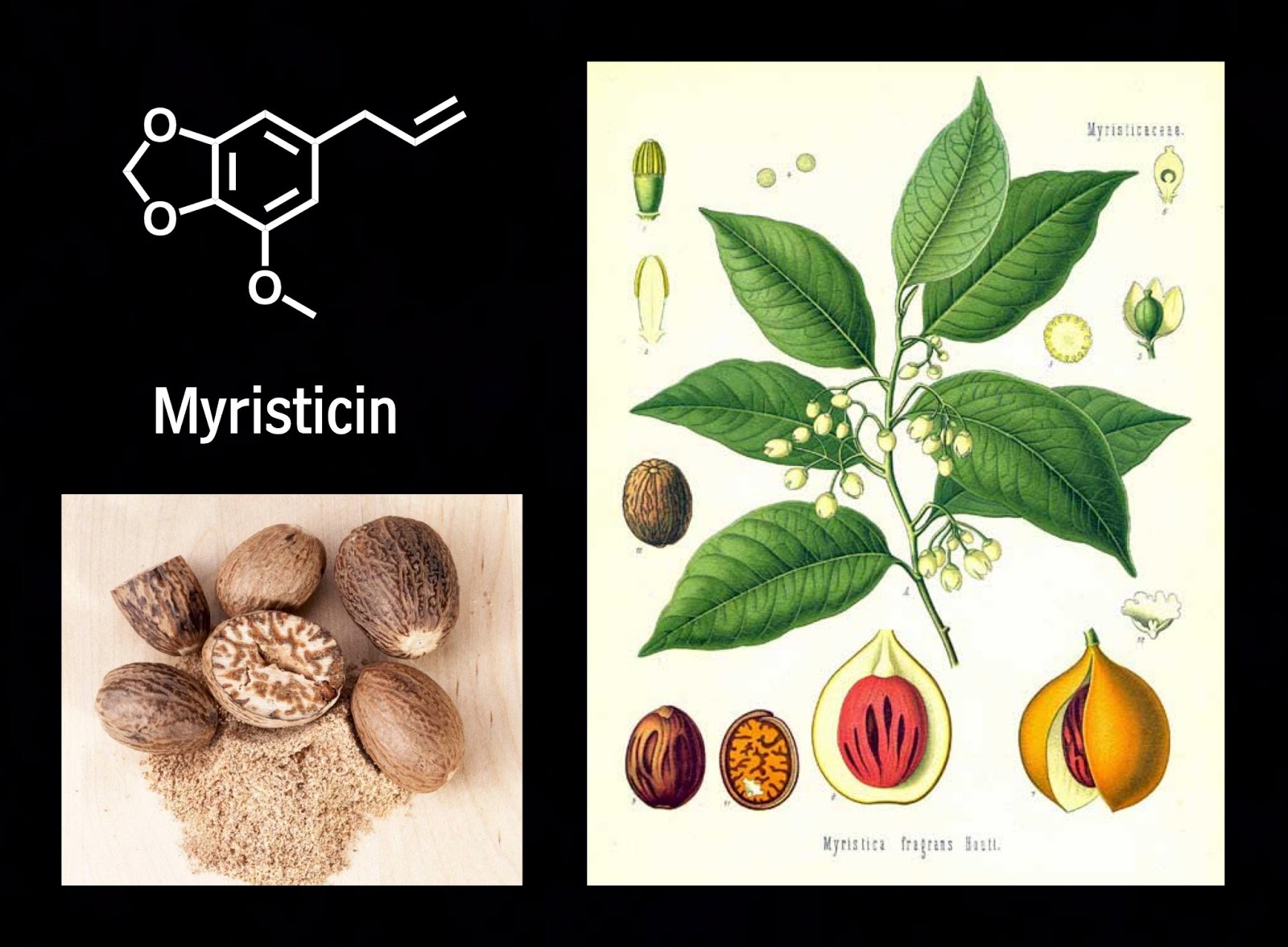
Myristicin: A compound from the evergreen Myristica fragrans, which is in of my favorite plant groups: the Magnoliales. This plant is the source of nutmeg (though myristicin is also found in the Apiaceae; dill, parsley, etc.). This phenolic compound is psychoactive at high doses - causing nausea and paranoia.

Sunday, 28 October 2018

October phytochemicals - absinthe, aspirin, and more!

Honokiol: a polyphenol lignin antioxidant from the bark and cones of Magnolia spp. A traditional medicine whose hydrophobicity facilitates crossing the blood-brain barrier (thus bioavailability) where it exerts various phamacological effects.

Thujone: a bicyclic monoterpene from wormwood (the aster Artemisia absinthium) and many other plant species. It is a GABA agonist that can cause muscle spasms and convulsions (it is dangerous!). Historically used in the making of absinthe, but does not seem to be psychoactive. It is apparently still unclear what (if any) psychoactive ingredient is present in absinthe

Salicin: a glycosylated salicyl alcohol - responsible for the anti-inflammatory and pain relief effects of willow bark (Salix spp.) and in part for the effects of castoreum (if you haven't looked up castoreum - you should). It has been used since hundreds of years BC, and inspired modern aspirin - reacting salicylic acid with an acetylating agent gives the acetyl salicylic acid that is used the world over.

Labdane: historically harvested as incense (mentioned in Genesis?) by brushing labdanum resin from Cistus ladanifer (Malvales). It was also harvested by brushing the legs of livestock (sheep and goats) that had been brushing against Cistus bushes. A precursor to bioactive and scented terpenes in both gymno- and angiosperms, labdanes are still used in permumes today.

Friday, 14 September 2018

The taste and aroma of saffron

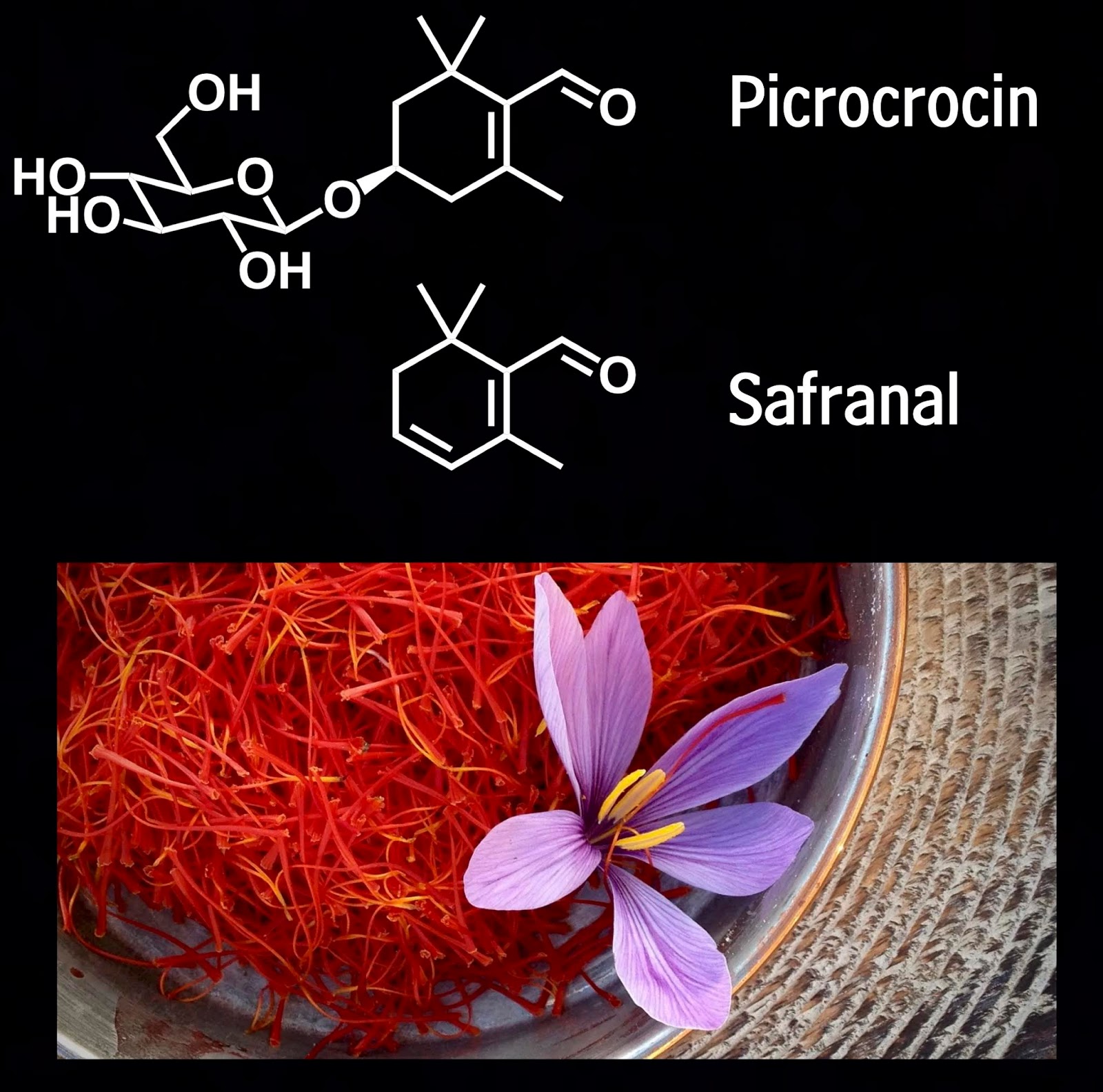
Worth more than their weight in gold, saffron crocus (Crocus sativus, Iridaceae) stigmata produce the glycoside picrocrocin and its aglycone saffranal (products of zeaxanthin degradation?) - major contributors to the taste and aroma of the "king of spices".


Friday, 31 August 2018

Sassafras

This week: safrole. Though found in small amounts in anise, cinnamon, and nutmeg, it's a major component of sassafras oil. It has a characteristic "candy shop" scent, is a synthetic precursor to MDMA, and is evidently banned from use in food by the FDA.

Figure 1: Sassafras albidum - the sassafras tree - oil from which contains safrole, an interesting plant chemical.


Friday, 24 August 2018

Amorphophallus titanum and the essence of rotting fish

Have you heard of the corpse flower? Scientifically known as Amorphophallus titanum, the corpse flower gets its name because it generates a variety of malodorous compounds to attract animal pollinators. Among these is trimethylamine, or "essence of rotting fish" (Fig. 1), a biomarker used by fish freshness detectors.

An excellent short video here on these compounds and the ability of the corpse flower to generate heat!
The chemistry of the corpse flower's stink - Bytesize Science

Figure 1: The flowers of Amorphophallus titanum generate, among others, the smell compound trimethylamine, which smells like rotting fish.